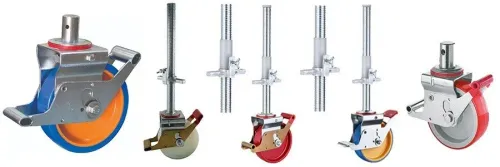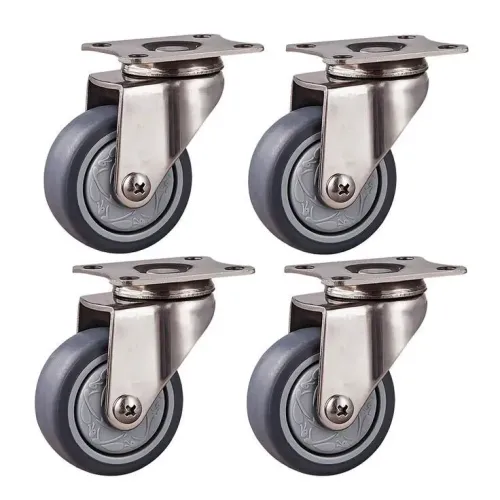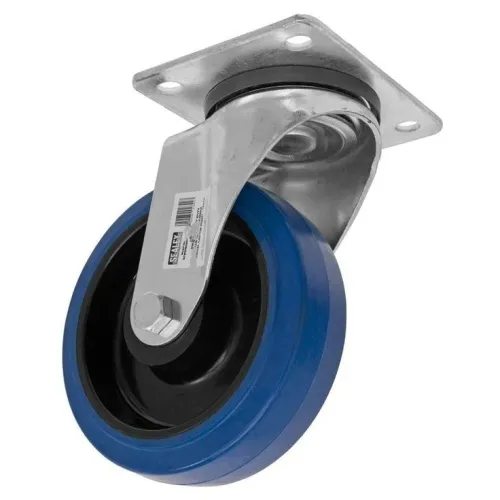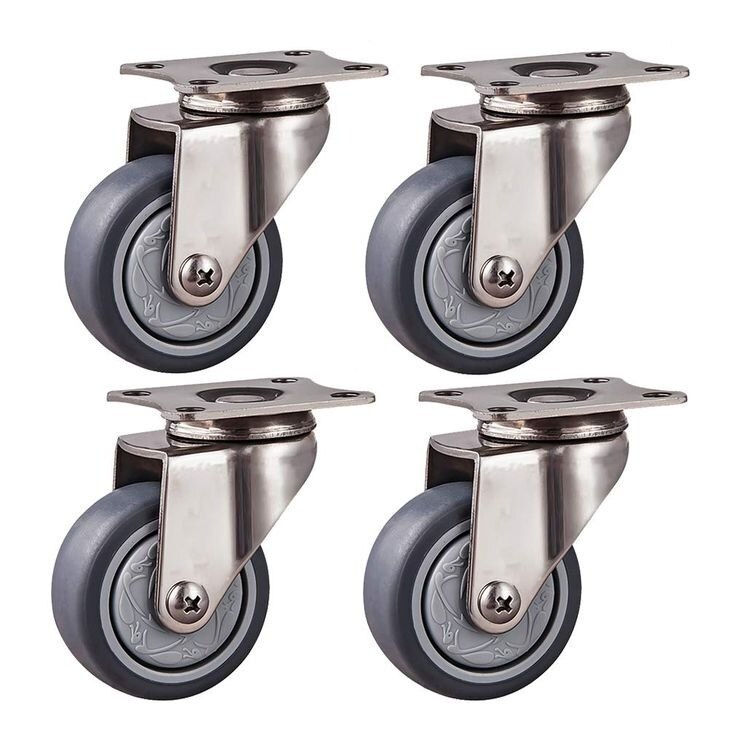
A leveling adjustable caster does more than stop a machine from rolling: it transfers the load from the wheel to a height-adjustable foot so equipment can stand level and stable. By the end, you will know how to specify the mechanism, calculate capacity, check dimensions, choose wheels for Pune operating conditions, and compare an RXH quotation with the actual duty.
Key takeaways
- Transfer machine weight from the wheel to the leveling foot before operation.
- Compare static, rolling and installed loads—not just the headline capacity.
- Reject pressed steel when corrosion, impact or uneven floors exceed its limits.
- Request drawings, load figures, materials and installation details with the RXH quotation.
How a leveling adjustable caster supports and levels a machine
A leveling adjustable caster does more than stop a wheel from turning. It combines a rolling wheel with a threaded leveling stem and foot pad, allowing you to transfer the machine’s weight from the wheel to the pad. A lock nut secures the chosen height; the foot then supports and levels the stationary equipment.
Use the caster in this order:
- Roll the machine into its final position on a suitable floor.
- Apply the caster’s total-lock brake, or use another positive restraint that stops both rolling and swivelling.
- Turn the adjustment mechanism to lower the foot toward the floor.
- Continue only until the foot carries the intended load and the wheel is unloaded or partly unloaded, as the caster design specifies.
- Adjust the feet to remove rocking and bring the machine level.
- Tighten the lock nut or locking device, then push the machine lightly to check for movement before operating it.
Never treat a wheel-only brake as a leveling support. It can stop rolling while the machine still swivels. Do not loosen a lock nut or raise a foot under a loaded machine unless the manufacturer’s procedure permits it; uncontrolled weight transfer can tip equipment or overload one caster.
A heavy pressed steel swivel caster, including an RXH-series model, is not automatically a leveling adjustable caster. Confirm that the quoted configuration includes the threaded foot, adjustment hardware and rated support function.
Which dimensions and load figures belong in the specification
Confirm two separate points: the caster fits the machine, and its safe working load covers the machine at its heaviest working condition. Give a leveling adjustable caster manufacturer in Pune the complete equipment data, not just the desired wheel diameter.
| Specification item | What to state | Why it matters |
|---|---|---|
| Overall fit | Wheel diameter and width, minimum and maximum overall height, usable leveling stroke, foot-pad diameter | Confirms travel clearance and the required leveling range |
| Mounting geometry | Plate length and width, bolt-hole spacing, bolt size, swivel clearance, adjustment-handle or screw access | Prevents a plate that fits in theory but cannot be bolted or adjusted |
| Working load | Machine, tooling, consumables and maximum payload as one gross total | Establishes the actual load to support |
| Duty conditions | Number of casters, static or mobile use, travel frequency, thresholds, joints, ramps and debris | Exposes impact and uneven-load effects that reduce practical capacity |
| Operating environment | Floor condition, temperature, moisture, chemicals and wheel tread | Connects the rating to the real service |
Calculate capacity from the gross load and the manufacturer’s stated load-sharing method. Do not divide the weight blindly by every caster: uneven floors can leave only three casters carrying the load. Ask for separate static and mobile ratings, and apply the supplier’s allowance for impacts.
A catalogue test load under smooth, controlled conditions is not automatically a safe working load over thresholds.
When pressed steel is suitable and when the wheel is the wrong choice
Pressed steel is suitable for moderate industrial duty where impacts, side thrust and towing loads are controlled. It is the wrong choice when a deformed fork, damaged raceway or loose kingpin could stop production; wheel diameter alone cannot establish capacity.
| Option | What to compare | Choose it when | Wrong choice or warning |
|---|---|---|---|
| Pressed-steel fork | Gauge, geometry, kingpin, raceway and swivel bearing | Cost and moderate loads matter | Rough floors, high side thrust or frequent towing demand a forged or fabricated fork |
| Brake | Total-lock or wheel-lock action and holding performance | The parked machine must resist rolling | A wheel brake alone is inadequate if the swivel can rotate |
| Leveling foot | Threaded stem, lock nut, foot diameter and load transfer | You need stationary support after positioning | Do not assume an RXH series caster includes a leveling function |
| Wheel tread | Polyurethane, rubber, nylon or steel; hardness and width | Match the tread to floor protection, noise and load | Hard steel or nylon can damage floors; soft rubber can deform under heavy loads |
A leveling foot does not replace a travel wheel: roll into position, apply the brake, lower the foot, transfer the load from wheel to foot, and verify stability. Specify the mounting type—top plate, threaded stem, expanding stem or bolt-hole pattern—because replacement compatibility depends on it.
When comparing heavy pressed steel castors in Pune, request the exact wheel core, tread, axle, finish and working-load rating, not only the series name.
How floor conditions, travel and installation change the selection
A leveling adjustable caster remains stable only when the floor, travel duty and installation allow the foot to carry the machine without imposing wheel or frame stress. A flat, sound floor suits leveling; cracks, slope, loose tiles and soft patches can rock the foot or overload one caster.
| Condition | Selection consequence | Check before approval |
|---|---|---|
| Smooth epoxy or concrete | Polyurethane or rubber limits noise and floor marking | Tread hardness, rolling resistance and chemical compatibility |
| Steel swarf, sharp debris or high point loads | Steel, cast iron or hard nylon resists cutting but increases noise and floor damage | Debris size, floor protection and wheel capacity |
| Thresholds, joints, ramps or frequent pushing | Impact raises the required working margin beyond a static catalogue rating | Dynamic load allowance and travel frequency |
| Washdown, oils, solvents, heat or outdoor exposure | Corrosion, swelling or tread failure can make the foot and wheel unreliable | Plating, seals, temperature range and chemical resistance |
- Specify the gross load including tooling, consumables and maximum payload; check a four-caster frame against a three-caster load case unless equal loading is guaranteed.
- State the threshold height, travel frequency, floor slope, contamination and required leveling stroke.
- Confirm mounting-plate dimensions, bolt-hole spacing, minimum and maximum height, foot-pad diameter and adjustment clearance.
- Install on a rigid frame, lock the caster before leveling, and verify that the foot—not the wheel—supports the stationary machine.
What to request from a Pune manufacturer before approving an RXH quotation
Do not approve an RXH quotation from a leveling adjustable caster manufacturer for heavy pressed steel castors in Pune until the supplier matches the caster to your duty, not just your mounting holes.
The RXH name is a product-family label, not an international performance standard, and a heavy pressed steel swivel caster is not automatically a leveling caster.
1. Send the supplier the machine’s gross mass, tooling, consumables and maximum payload; number of casters; static or mobile duty; travel frequency; floor joints, thresholds, ramps and debris; required leveling stroke; minimum and maximum height; environment; wheel tread; and mounting geometry.
2. Request the exact RXH datasheet and drawing. Check wheel diameter and width, safe working load, static versus mobile rating, swivel and brake or leveling function, mounting type, plate-hole pattern or stem dimensions, overall height, materials, finish and declared test basis. Top plates, threaded stems and expanding stems are not interchangeable.
3. Require test evidence for load, swivel operation, brake holding and leveling-foot engagement. Ask how dynamic effects were applied; a catalogue load under smooth laboratory conditions does not prove safe service over thresholds.
4. On delivery, inspect plate-hole position, height, wheel runout, visible welds, bends, cracks and plating damage. Test swivel smoothness under load, then lock the caster, lower the foot, transfer weight from wheel to foot and verify stability. A no-load spin test misses kingpin looseness and raceway damage.
Prime Distributors should provide these details when comparing RXH series castors in Pune, so competing quotations describe equivalent equipment rather than identical-looking photographs.
Related product
 | RXH Series Heavy Duty Pressed Steel Castors having double ball bearing in Swivel head with thick threaded King Pin to avoid dust. View product → |
Frequently asked questions
How does a leveling adjustable caster support and level a machine?
The wheel moves the machine into position, then the threaded stem lowers the foot pad. Tightening the lock nut secures the height and transfers the stationary load from the wheel to the pad.
Which dimensions and load figures should a caster specification include?
Request overall height, wheel diameter and width, stem size and length, foot-pad diameter, mounting dimensions, swivel clearance, static capacity, rolling capacity and the intended total machine load.
When is pressed steel suitable for a leveling adjustable caster?
Pressed steel suits applications with controlled indoor conditions, moderate impact and a reasonably smooth floor. Select another construction when corrosion, heavy shock, frequent travel or severe floor damage dominates the duty.
What should you request from a Pune manufacturer before approving an RXH quotation?
Request an RXH drawing, material and finish details, wheel and stem dimensions, rated load conditions, mounting instructions, quantity, delivery terms and confirmation that the quoted model matches your floor and travel requirements.